

Winter is coming, and tire choices can get confusing fast. The honest answer? For many drivers in Nashville, a good set of all-season tires is enough. But tread condition, cold snaps, and your usual driving conditions matter.
Winter tires can help in persistent cold and regular snow or ice. They are not an automatic upgrade for every Middle Tennessee commute. Here’s how to decide what makes sense for your vehicle.
What makes a winter tire different?
Winter tires are built for cold-weather traction. Their rubber compound stays more flexible in low temperatures, which helps the tire grip the road. The tread also has more small cuts, called sipes, that create extra biting edges. Deeper grooves help move snow and slush away from the contact patch.
All-season tires are designed to handle a range of conditions, including dry roads, rain, and some light winter weather. That versatility is useful, but “all-season” does not mean “best in every season.” In sustained cold, snow, or ice, an all-season tire may not grip like a dedicated winter tire.
A temperature near 45°F is often used as a rule of thumb for when winter tires may start to offer an advantage. It is not a magic cutoff. The tires, road, and conditions all matter. The AAA overview of winter tires explains why local driving conditions should guide the decision.
If you choose winter tires, use a matched set of four. Installing them only on the drive wheels can upset the vehicle’s balance and handling.
Are winter tires worth it for a Nashville commute?
It looks like many local drivers will have more ordinary cold, wet days than weeks of continuous snow. If your routine is mostly clear roads, rain, and occasional frost, quality all-season tires with healthy tread may be a sensible choice.
Winter tires may be worth considering if you regularly drive in sustained cold, encounter snow or ice often, or cannot avoid driving when winter weather arrives. Your daily schedule matters, too. A driver with flexible plans may be able to wait out a slick morning. Someone who must travel regardless may value the extra cold-weather traction.
But winter tires are not a guarantee of safe stopping on ice. Even the right tire cannot make a slick road predictable. On an icy day, slowing down, leaving extra space, avoiding sudden steering or braking, and staying off the road when possible can matter more than the tire label.
And when a rare snow event makes roads unsafe, no tire turns the trip into a good idea. If conditions look hazardous, maybe delay travel until the roads improve.
When winter tires may be overkill
Winter tires can be a poor fit if your vehicle spends most of the season on clear, warmer roads and you rarely encounter snow or ice. Their softer rubber is designed for cold. In warmer weather, it can wear more quickly than an all-season tire.
That means a seasonal tire changeover, storage, and the cost of owning another set. The exact expense depends on your vehicle and tire choice. It is worth comparing that total with how often you would actually use the winter tires.
For many Nashville-area commuters, it may make more sense to keep well-maintained all-seasons and plan for occasional winter weather. For drivers in Nashville, Murfreesboro, and surrounding areas of TN, the best answer depends on your route, schedule, and the condition of the tires already on your vehicle.
All-season tires have limits on ice
Here’s an important myth to clear up: all-season tires are not all-weather tires. They can handle a variety of conditions, but that does not mean they perform equally well on dry pavement, snow, and ice.
On the rare ice day, even a tire with good tread may have limited grip. Don’t assume that all-wheel drive or four-wheel drive will help you stop faster; those systems can help deliver power, but they do not replace tire traction when braking.
If you’re driving in snow, look for the three-peak mountain snowflake (3PMSF) symbol when checking tires for a severe-snow performance rating. An M+S marking alone is not the same certification. Still, no marking guarantees safe performance on ice. Check the tire maker’s guidance and choose based on the conditions you actually face.
Check pressure and tread before cold weather
Cold air can lower tire pressure. A commonly used estimate is about 1 psi for every 10°F drop in temperature, though the change can vary. Low pressure can affect handling and cause uneven wear.
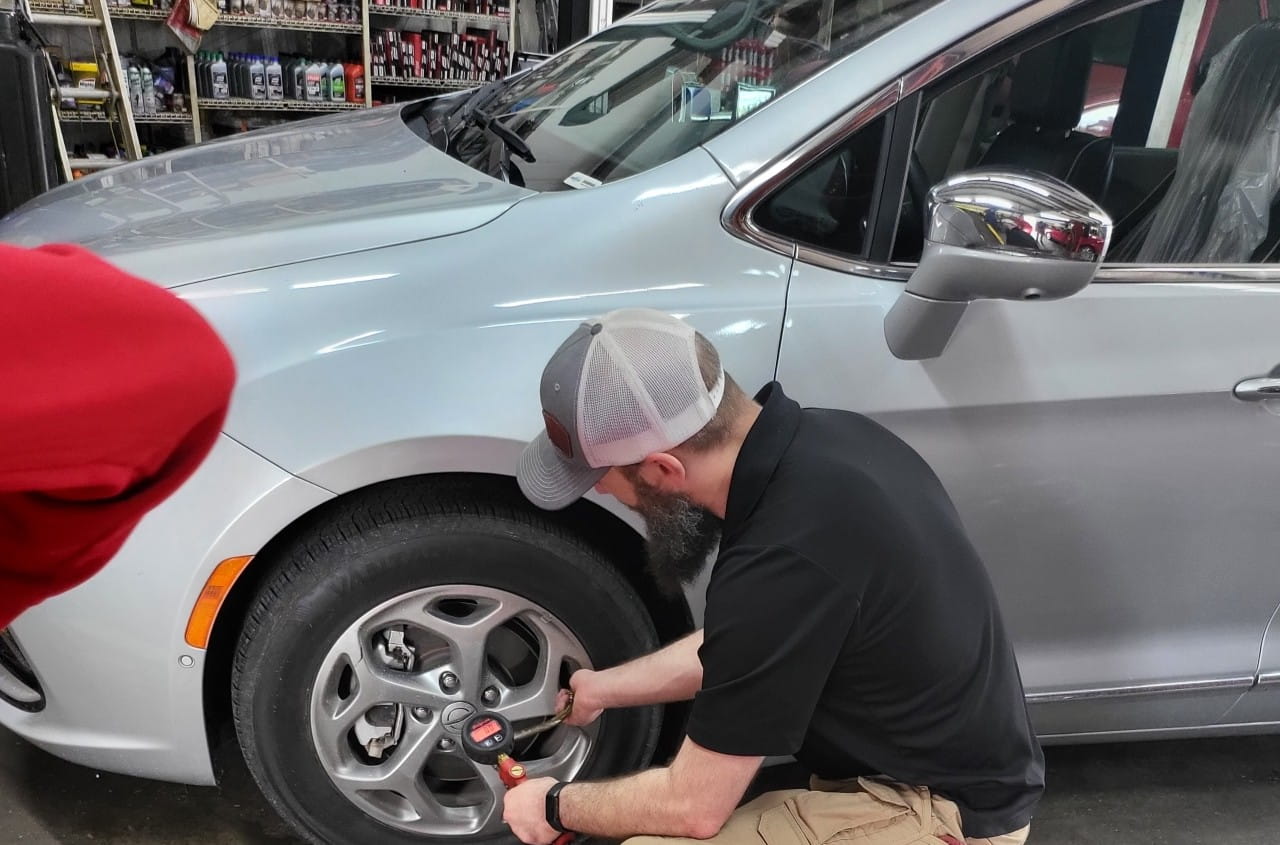
Check your tires at least monthly and before a longer drive, when they are cold. Use the pressure listed on the sticker inside the driver’s door or in your owner’s manual, not the maximum pressure printed on the tire sidewall. The NHTSA tire safety guide offers more tire safety and maintenance guidance.
Tread depth is just as important. A simple check is the penny test: place a penny into a tread groove with Lincoln’s head upside down. If you can see the top of his head, the tread is low, and it may be time to replace the tire. The test is a quick screen, not a precise measurement. A tread-depth gauge gives a clearer reading.
For extra wet-weather margin, tire safety guidance often recommends replacing tires before they reach the 2/32-inch wear-bar level. Around 4/32 inch, it’s a good idea to start planning ahead, especially if you expect wet or occasional wintry roads. The NHTSA guide explains tire wear indicators and the penny test.
Rotation and alignment help tires do their job
Even good tires can lose useful life or grip if they wear unevenly. Tire rotations help distribute wear across the set. Follow the schedule in your owner’s manual, since the right rotation pattern depends on your vehicle and tires.
Alignment matters, too. If the vehicle pulls to one side, the steering wheel sits off-center, or the tread looks more worn on one edge, it may be time to have the alignment checked. An alignment does not add tread or make a tire winter-ready, but it can help prevent uneven wear and support predictable handling.
A tire inspection can help you see whether the issue is pressure, tread, uneven wear, or something else. The Car People offers tire services and alignment for drivers in Nashville, Murfreesboro, and surrounding areas of TN.
A simple way to choose
All-seasons may be the practical choice if your winter driving is mostly on clear or wet roads, you rarely encounter snow or ice, and your tires have adequate tread.
Winter tires may be worth considering if you regularly drive in sustained cold or snow and ice, or your schedule makes it difficult to avoid those conditions. If you go that route, use four matching winter tires and plan to switch back when warmer weather returns.
Not sure? Maybe start with an honest assessment of your current tires, commute, and winter driving needs, not a sales pitch. A tire check can help you understand the condition of your tires and whether an alignment or rotation is due.
For car service in Nashville or auto repair in Nashville, you can book an appointment or review our tire and alignment services. Would you like help checking your tread, tire pressure, and alignment before the next cold snap?